
MENU

Exodus 23:10-11 and Letting Holy Ground Lie Fallow

exodus 23 meaning seventh year sabbath fallow ground lie fallow

exodus 23 meaning / seventh year sabbath / fallow ground / lie fallow

I wake up naturally at 4:55 am. It’s a weekday morning in June, and there is no sneaking in a mid-morning nap. The kids and I corral a hundred pounds’ worth of collective energy at the pool, the park, and wild bike rides down the neighborhood hill. There is dinner, a flurry of frantic freezer digging for favorite popsicle flavors before the last one is snatched, and no baths (because, the pool).

I was ready for bed when they were. But then Josh is home from work, we put our circus to bed, and we make our way to the patio.

The sky turns pink, and then black, and, before I know it, three hours blow by with him.

22 years together, I think, and we still got it.

We talked about nothing, really, and we talked about our days. Mostly, though, we talked about rest—specifically, what rest looks like for me. I’ve been spinning my wheels on a lot of things for a whole lot of calendar pages, always churning something out, piecing together a new vision, chasing after another idea. But always, always, spinning and never really making any measurable ground with any of it.

“What do you want to do?” he asks me pointedly. But, when he does, he is actually asking, “What do you want to do that has nothing at all to do with productivity or usefulness?”

I have no idea how to answer his question.

exodus 23 meaning / seventh year sabbath / fallow ground / lie fallow

***

exodus 23 meaning / seventh year sabbath / fallow ground / lie fallow
The sky is black, and then pink on the first morning of August when I morning-crawl to God’s throne of grace. I’m rounding the corner on the final paragraphs of my third book with the gait of a woman who didn’t just finish her first marathon after not running in years—she decided to run two, back-to-back.

It’s been a wild ride digging so deeply and so consistently into Scripture, chewing on it all and turning it into something that is digestible for anyone who might come across it. But, if I’m being completely transparent with you, it’s taken a notable toll on my mornings with God.

I whisper as much to Him, looking back at all the ground He and I have covered and acknowledging the places that ache, when I feel two distinct words reverberate throughout the core of my spirit:

exodus 23 meaning / seventh year sabbath / fallow ground / lie fallow

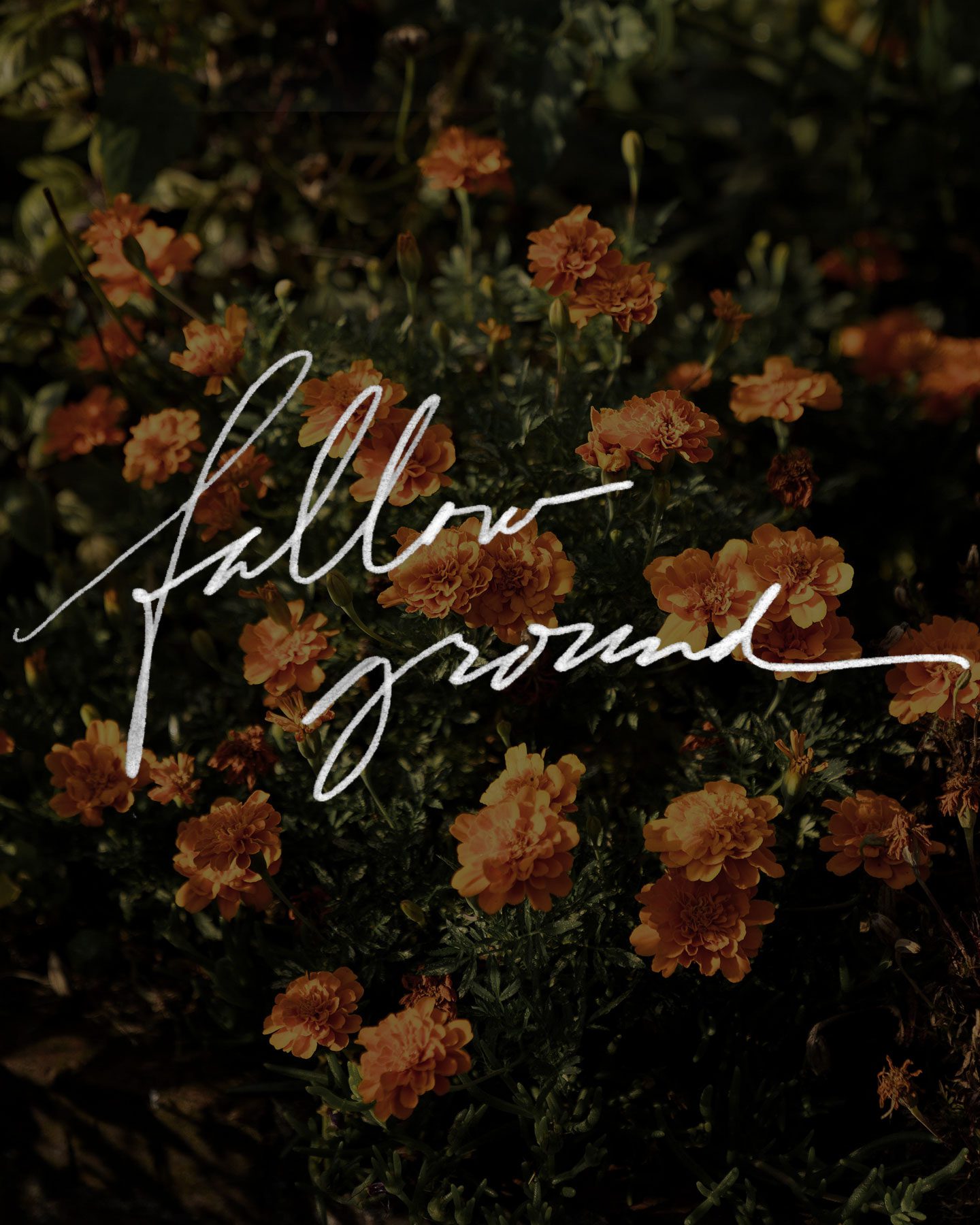
fallow ground

exodus 23 meaning / seventh year sabbath / fallow ground / lie fallow
As soon as they do, I go searching for them in my Bible. It’s not in the concordance, nor do any results appear in the searches on my favorite Bible sites (at least on my initial surface-level searching). So I went searching elsewhere and my mouth fell open when I found another woman’s words about fallow ground, especially in light of that late night porch conversation in June when I told my husband plainly that I didn’t know how to rest. I’d been praying in the days since that God would show me how.

And then, I find a seven-year-old blog post, ripe for my picking, right when I desperately needed it.

“I was so used to having my hand at the plow, my knees dirty from the work, that I didn’t know how to do nothing,” the author wrote. “Like a gentle mother, He pried my fingers off the plow. It wasn’t mine to hold anymore.”

I let out a breath I don’t know I’m holding. And in that moment of feeling seen, I go digging to see what the Bible had to say about fallow ground, and find it tucked in with the law of sabbaths in Exodus 23.

“Six years you shall sow your land and gather in its produce,” Exodus 23:10-11 says, “but the seventh year you shall let it rest and lie fallow, that the poor of your people may eat.” It’s not until verse 12 that God commands the weekly Sabbath and I’m floored.

I’m familiar with the weekly Sabbath, and I am shocked as I read to see that God commanded the seven-year Sabbath before the weekly one. Why haven’t I ever heard anyone talking about this?? I wondered. Why haven’t I seen this modeled?? Why isn’t this a thing in today’s Christian culture??

I dig deeper, do more research, and learn that, in Jewish culture, the seventh-year sabbath is called Shmita or “the year of release.” It’s a 365-day stretch when agricultural lands lie untouched and uncultivated. Fields rest. Private land holdings become open. And staples like food storage and perennial harvests are freely redistributed and accessible to all.

I turn to the linguistics. There are three other places in the Bible that use the word “fallow,” and all three times, it’s the Hebrew word nir. But here, in Exodus 23? It’s a combination of two different Hebrew words entirely: samat and natas: “The seventh year you shall let it rest (samat) and lie fallow (natas).”

The first word, samat is to release something by letting it drop or fall. It’s letting a field lie untilled. Letting it be. Letting it rest. And the second, natas, is to leave it alone after it drops. But there’s one very specific detail tucked into the word definition for natas that says everything about the key to a proper Shmita—it also means “to entrust to.”

It’s not just letting the crops fall where they may, it’s letting something you are (and have been) perfectly capable of caring for alone and committing it into the care of someone else.

Yes, plant and cultivate. Sow and gather and harvest, year after year for half-a-dozen years. But, the moment that seventh year hits? Let it drop. Leave it alone. Resist the urge to harvest the crops (because the crops will still come.) And trust that God will care for it for you.

Sure, there are droughts and floods, infestations and all kinds of land-affecting things that are entirely outside of our control. But this seventh-year Sabbath? It’s something you are entirely control of.

It’s not barren ground that won’t grow anything. It’s fertile ground left uncultivated. It’s letting something lay that’s working well, producing well, growing well, and flourishing. It’s releasing all ownership to any of it and letting anyone come and take of it freely.

It’s a Sabbath that readies us for the next seven-year stretch, the next chapter of our story. And, in that fallowness?

“God is the one who cultivates that land for new things,” that 2018 blog post I dug up continued. “He awakens and breaks open the seeds that have laid dormant before to thrive in the soil He has made good. So sit with Him. Rest with Him. Watch Him do His good and holy work while the land still lies fallow.”

exodus 23 meaning / seventh year sabbath / fallow ground / lie fallow

***

exodus 23 meaning / seventh year sabbath / fallow ground / lie fallow
I think about this all day and well into the next. And on that second afternoon of August, I dig back through my old prayer journals to see what was happening six years ago—to see if this is all just an interesting tidbit or if God is asking me to take this all literally.

My mouth falls open when I get to the teal journal emblazoned with “Big Ideas.” I don’t have to open it to know, everything inside of me does already. But I crack the cover and turn to the first page anyway. It’s dated mid-July 2019, almost exactly six years ago.

I was newly pregnant with Rinnah and didn’t know that I was also about to birth the dream of a quiet time binder (that hasn’t make it off the ground—yet). Six months later, I began writing the School of Scripture. I trademarked Dig Your Well and then, of course, created the Dig Your Well Community. It all started with that one journal. The entire current trajectory of my business, my ministry, started right there in mid-July 2019.

It suddenly felt as if that journal was the first bookend of what God is only now showing me was an official six-year stretch. And that week, at the literal beginning of the seventh year, God whispered, “It’s time to Sabbath.”

And, do you know what the seventh-year bookend will be—the one that marks the end of this season and the beginning of a brand new one?
exodus 23 meaning / seventh year sabbath / fallow ground / lie fallow

July 28, 2026

(the day that my next book releases)

exodus 23 meaning / seventh year sabbath / fallow ground / lie fallow
I flash to 48 hours before, when my three babes were neighborhood bike riding and I was weeding our front yard. As I plucked out weed after weed, I felt a sudden and indescribable urge to pull the last weeds from these spiritual fields that I’ve sown and planted and tended to and hovered over for years and just let them lie for a while.

The very next morning, on the morning of August 1st, I sat down and took a survey of the last five or six years (not knowing any of this fallow ground conversation). I told God that, when I open my Bible, I feel an anxious tension. I don’t know how to dig for myself anymore, without framing it through the lens of a future writing piece.

I don’t know what or who I am without this, I wrote.

Right then is when it happened. That’s the moment He whispered the fallow ground words. That’s the moment when I felt seen.


what this means for you


I have so much more to dig into on this, but for now? I’m taking it all very literally, which means I’m giving you, your friends, your neighbors, your entire Bible study, free access to my cultivated fields for the next year. The Dig Your Well Community (and all of its content) is now completely free until August 1, 2026.

Don’t worry, I’ll still be popping into your inbox once every month or so (sign up here if you aren’t already subscribed). I still have plenty of words to share.
But, for now, I’m taking my hand off of the manuscript plow and taking a little bit of a breather. Because, come next July? A new season is waiting.
Add a comment...

Your email is never published or shared. Required fields are marked *

Exodus 23:10-11 and Letting Holy Ground Lie Fallow

exodus 23 meaning seventh year sabbath fallow ground lie fallow

exodus 23 meaning / seventh year sabbath / fallow ground / lie fallow

I wake up naturally at 4:55 am. It’s a weekday morning in June, and there is no sneaking in a mid-morning nap. The kids and I corral a hundred pounds’ worth of collective energy at the pool, the park, and wild bike rides down the neighborhood hill. There is dinner, a flurry of frantic freezer digging for favorite popsicle flavors before the last one is snatched, and no baths (because, the pool).

I was ready for bed when they were. But then Josh is home from work, we put our circus to bed, and we make our way to the patio.

The sky turns pink, and then black, and, before I know it, three hours blow by with him.

22 years together, I think, and we still got it.

We talked about nothing, really, and we talked about our days. Mostly, though, we talked about rest—specifically, what rest looks like for me. I’ve been spinning my wheels on a lot of things for a whole lot of calendar pages, always churning something out, piecing together a new vision, chasing after another idea. But always, always, spinning and never really making any measurable ground with any of it.

“What do you want to do?” he asks me pointedly. But, when he does, he is actually asking, “What do you want to do that has nothing at all to do with productivity or usefulness?”

I have no idea how to answer his question.

exodus 23 meaning / seventh year sabbath / fallow ground / lie fallow

***

exodus 23 meaning / seventh year sabbath / fallow ground / lie fallow
The sky is black, and then pink on the first morning of August when I morning-crawl to God’s throne of grace. I’m rounding the corner on the final paragraphs of my third book with the gait of a woman who didn’t just finish her first marathon after not running in years—she decided to run two, back-to-back.

It’s been a wild ride digging so deeply and so consistently into Scripture, chewing on it all and turning it into something that is digestible for anyone who might come across it. But, if I’m being completely transparent with you, it’s taken a notable toll on my mornings with God.

I whisper as much to Him, looking back at all the ground He and I have covered and acknowledging the places that ache, when I feel two distinct words reverberate throughout the core of my spirit:

exodus 23 meaning / seventh year sabbath / fallow ground / lie fallow

fallow ground

exodus 23 meaning / seventh year sabbath / fallow ground / lie fallow
As soon as they do, I go searching for them in my Bible. It’s not in the concordance, nor do any results appear in the searches on my favorite Bible sites (at least on my initial surface-level searching). So I went searching elsewhere and my mouth fell open when I found another woman’s words about fallow ground, especially in light of that late night porch conversation in June when I told my husband plainly that I didn’t know how to rest. I’d been praying in the days since that God would show me how.

And then, I find a seven-year-old blog post, ripe for my picking, right when I desperately needed it.

“I was so used to having my hand at the plow, my knees dirty from the work, that I didn’t know how to do nothing,” the author wrote. “Like a gentle mother, He pried my fingers off the plow. It wasn’t mine to hold anymore.”

I let out a breath I don’t know I’m holding. And in that moment of feeling seen, I go digging to see what the Bible had to say about fallow ground, and find it tucked in with the law of sabbaths in Exodus 23.

“Six years you shall sow your land and gather in its produce,” Exodus 23:10-11 says, “but the seventh year you shall let it rest and lie fallow, that the poor of your people may eat.” It’s not until verse 12 that God commands the weekly Sabbath and I’m floored.

I’m familiar with the weekly Sabbath, and I am shocked as I read to see that God commanded the seven-year Sabbath before the weekly one. Why haven’t I ever heard anyone talking about this?? I wondered. Why haven’t I seen this modeled?? Why isn’t this a thing in today’s Christian culture??

I dig deeper, do more research, and learn that, in Jewish culture, the seventh-year sabbath is called Shmita or “the year of release.” It’s a 365-day stretch when agricultural lands lie untouched and uncultivated. Fields rest. Private land holdings become open. And staples like food storage and perennial harvests are freely redistributed and accessible to all.

I turn to the linguistics. There are three other places in the Bible that use the word “fallow,” and all three times, it’s the Hebrew word nir. But here, in Exodus 23? It’s a combination of two different Hebrew words entirely: samat and natas: “The seventh year you shall let it rest (samat) and lie fallow (natas).”

The first word, samat is to release something by letting it drop or fall. It’s letting a field lie untilled. Letting it be. Letting it rest. And the second, natas, is to leave it alone after it drops. But there’s one very specific detail tucked into the word definition for natas that says everything about the key to a proper Shmita—it also means “to entrust to.”

It’s not just letting the crops fall where they may, it’s letting something you are (and have been) perfectly capable of caring for alone and committing it into the care of someone else.

Yes, plant and cultivate. Sow and gather and harvest, year after year for half-a-dozen years. But, the moment that seventh year hits? Let it drop. Leave it alone. Resist the urge to harvest the crops (because the crops will still come.) And trust that God will care for it for you.

Sure, there are droughts and floods, infestations and all kinds of land-affecting things that are entirely outside of our control. But this seventh-year Sabbath? It’s something you are entirely control of.

It’s not barren ground that won’t grow anything. It’s fertile ground left uncultivated. It’s letting something lay that’s working well, producing well, growing well, and flourishing. It’s releasing all ownership to any of it and letting anyone come and take of it freely.

It’s a Sabbath that readies us for the next seven-year stretch, the next chapter of our story. And, in that fallowness?

“God is the one who cultivates that land for new things,” that 2018 blog post I dug up continued. “He awakens and breaks open the seeds that have laid dormant before to thrive in the soil He has made good. So sit with Him. Rest with Him. Watch Him do His good and holy work while the land still lies fallow.”

exodus 23 meaning / seventh year sabbath / fallow ground / lie fallow

***

exodus 23 meaning / seventh year sabbath / fallow ground / lie fallow
I think about this all day and well into the next. And on that second afternoon of August, I dig back through my old prayer journals to see what was happening six years ago—to see if this is all just an interesting tidbit or if God is asking me to take this all literally.

My mouth falls open when I get to the teal journal emblazoned with “Big Ideas.” I don’t have to open it to know, everything inside of me does already. But I crack the cover and turn to the first page anyway. It’s dated mid-July 2019, almost exactly six years ago.

I was newly pregnant with Rinnah and didn’t know that I was also about to birth the dream of a quiet time binder (that hasn’t make it off the ground—yet). Six months later, I began writing the School of Scripture. I trademarked Dig Your Well and then, of course, created the Dig Your Well Community. It all started with that one journal. The entire current trajectory of my business, my ministry, started right there in mid-July 2019.

It suddenly felt as if that journal was the first bookend of what God is only now showing me was an official six-year stretch. And that week, at the literal beginning of the seventh year, God whispered, “It’s time to Sabbath.”

And, do you know what the seventh-year bookend will be—the one that marks the end of this season and the beginning of a brand new one?
exodus 23 meaning / seventh year sabbath / fallow ground / lie fallow

July 28, 2026

(the day that my next book releases)

exodus 23 meaning / seventh year sabbath / fallow ground / lie fallow
I flash to 48 hours before, when my three babes were neighborhood bike riding and I was weeding our front yard. As I plucked out weed after weed, I felt a sudden and indescribable urge to pull the last weeds from these spiritual fields that I’ve sown and planted and tended to and hovered over for years and just let them lie for a while.

The very next morning, on the morning of August 1st, I sat down and took a survey of the last five or six years (not knowing any of this fallow ground conversation). I told God that, when I open my Bible, I feel an anxious tension. I don’t know how to dig for myself anymore, without framing it through the lens of a future writing piece.

I don’t know what or who I am without this, I wrote.

Right then is when it happened. That’s the moment He whispered the fallow ground words. That’s the moment when I felt seen.


what this means for you


I have so much more to dig into on this, but for now? I’m taking it all very literally, which means I’m giving you, your friends, your neighbors, your entire Bible study, free access to my cultivated fields for the next year. The Dig Your Well Community (and all of its content) is now completely free until August 1, 2026.

Don’t worry, I’ll still be popping into your inbox once every month or so (sign up here if you aren’t already subscribed). I still have plenty of words to share.
But, for now, I’m taking my hand off of the manuscript plow and taking a little bit of a breather. Because, come next July? A new season is waiting.
Add a comment...

Your email is never published or shared. Required fields are marked *

keep reading & exploring

meanwhile, on instagram

We're On Instagram